
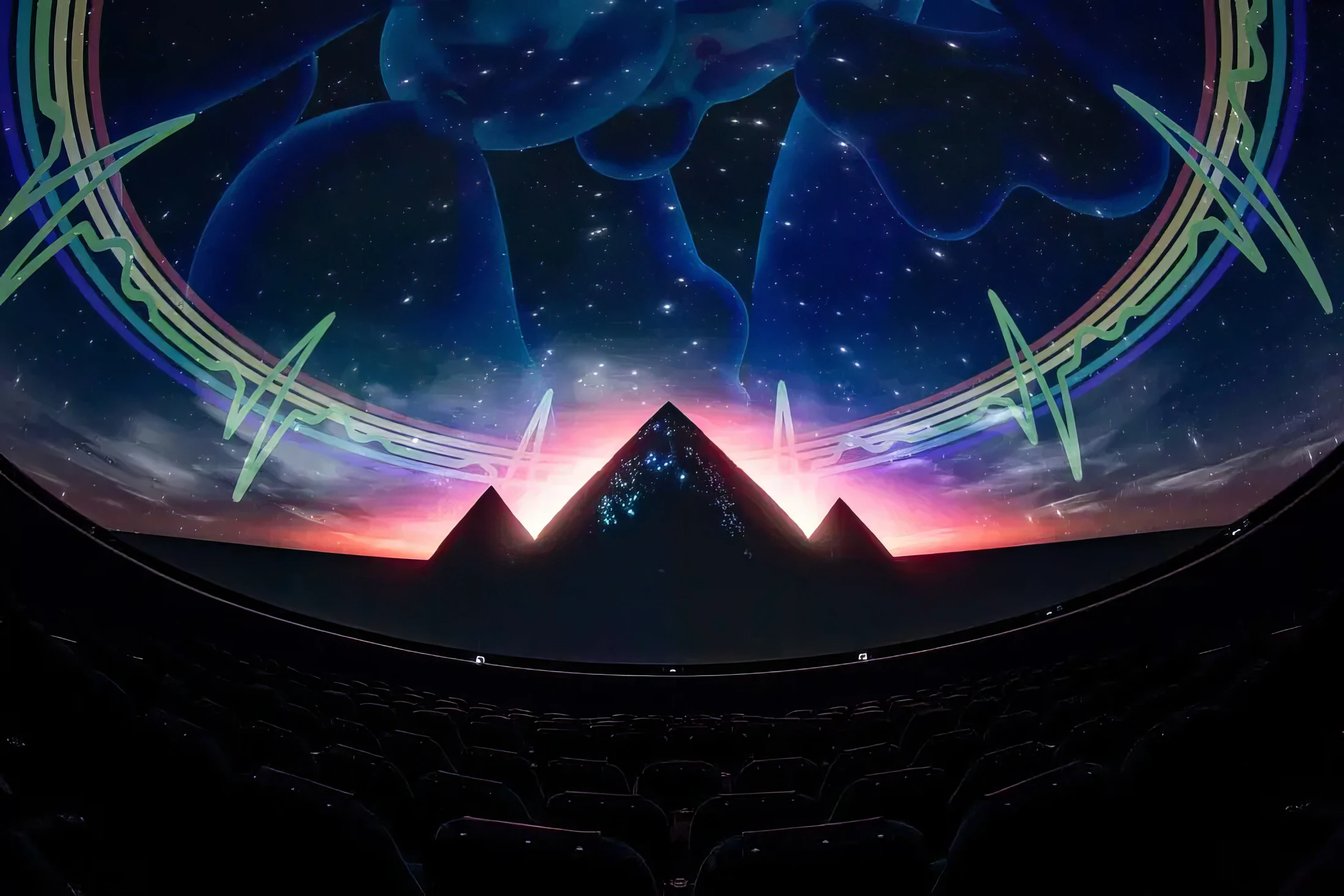
In development
AI video outpainting
Extend video into the wider field of view that dome and panoramic screens require.
Explore productVideo outpainting, volumetric reconstruction and spatial playback software, supported by camera-system engineering and a full-scale display venue.
Extend video into the wider field of view that dome and panoramic screens require.
Explore product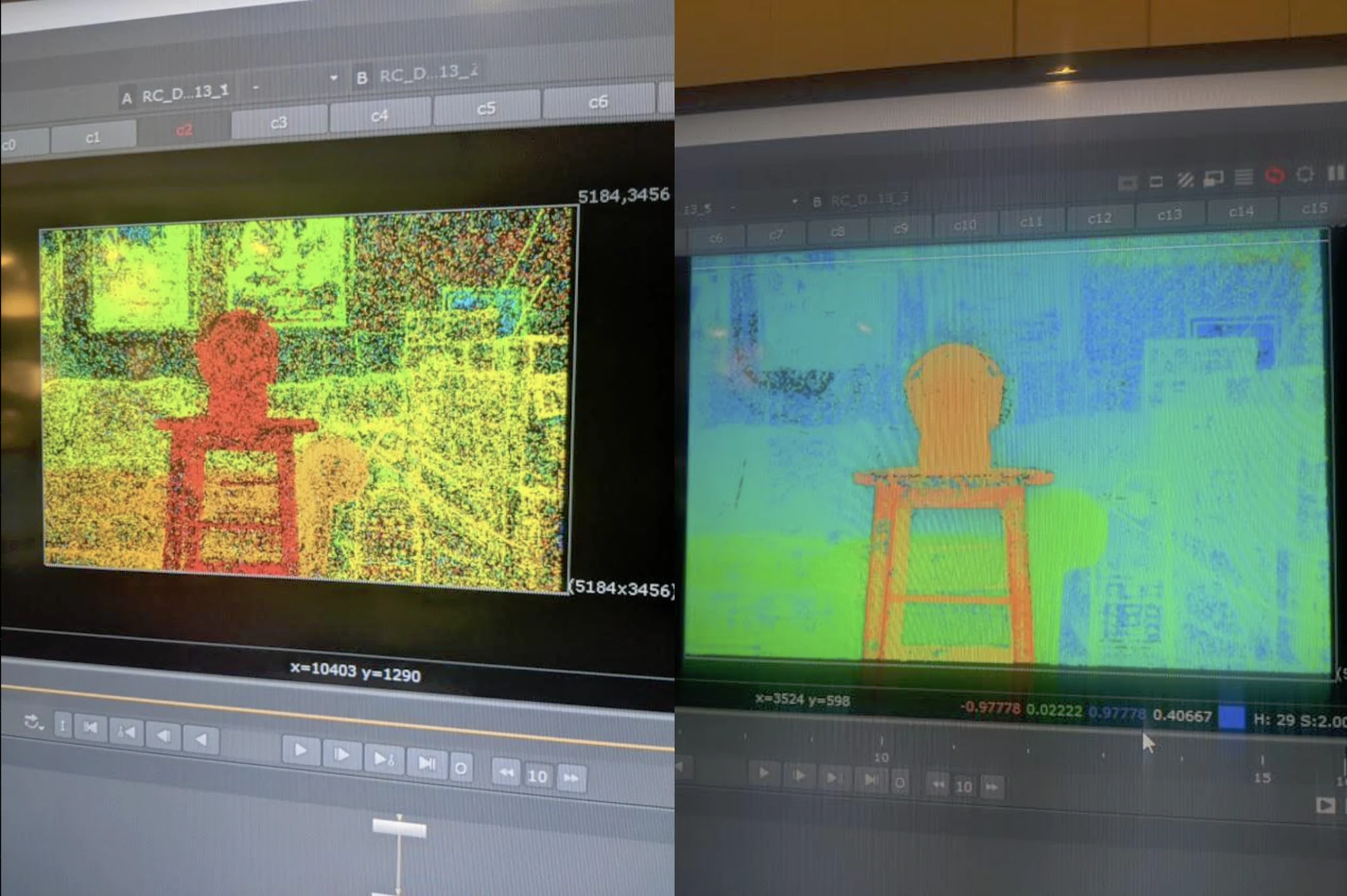
Reconstruct moving subjects from camera views, with depth and geometry that hold together through a performance.
Explore product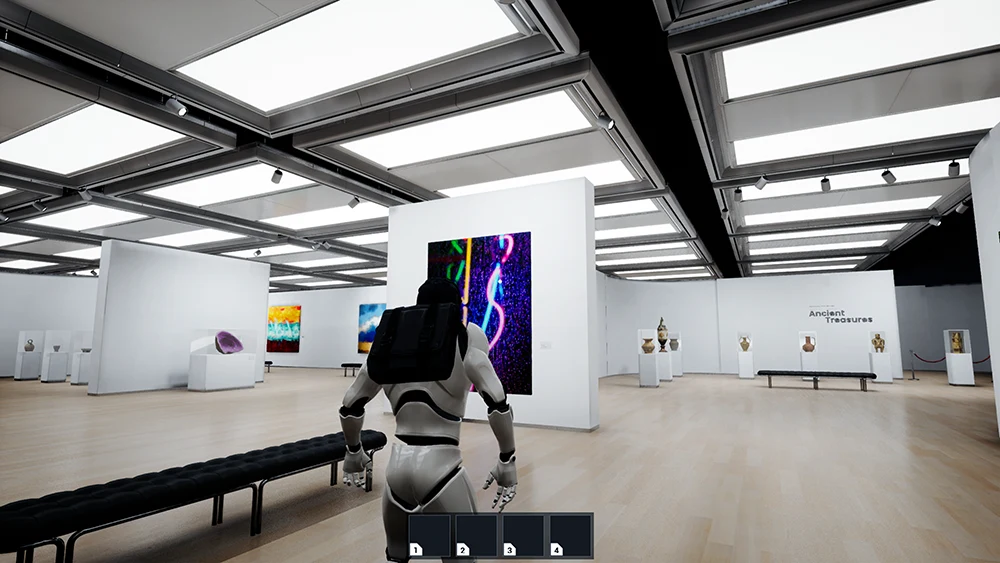
Spatial playback software, licensed for SuperMuseum: America. Now developing WebGPU and Vision Pro players.
Explore productOur research connects real camera views, estimated depth and synthetic scene data. Volusynth explores multiview datasets with linked images, depth, camera calibration and pose information.
See the research programmeImage & frame identity
Distance at each pixel
Calibration & pose
intrinsics
rotation
translation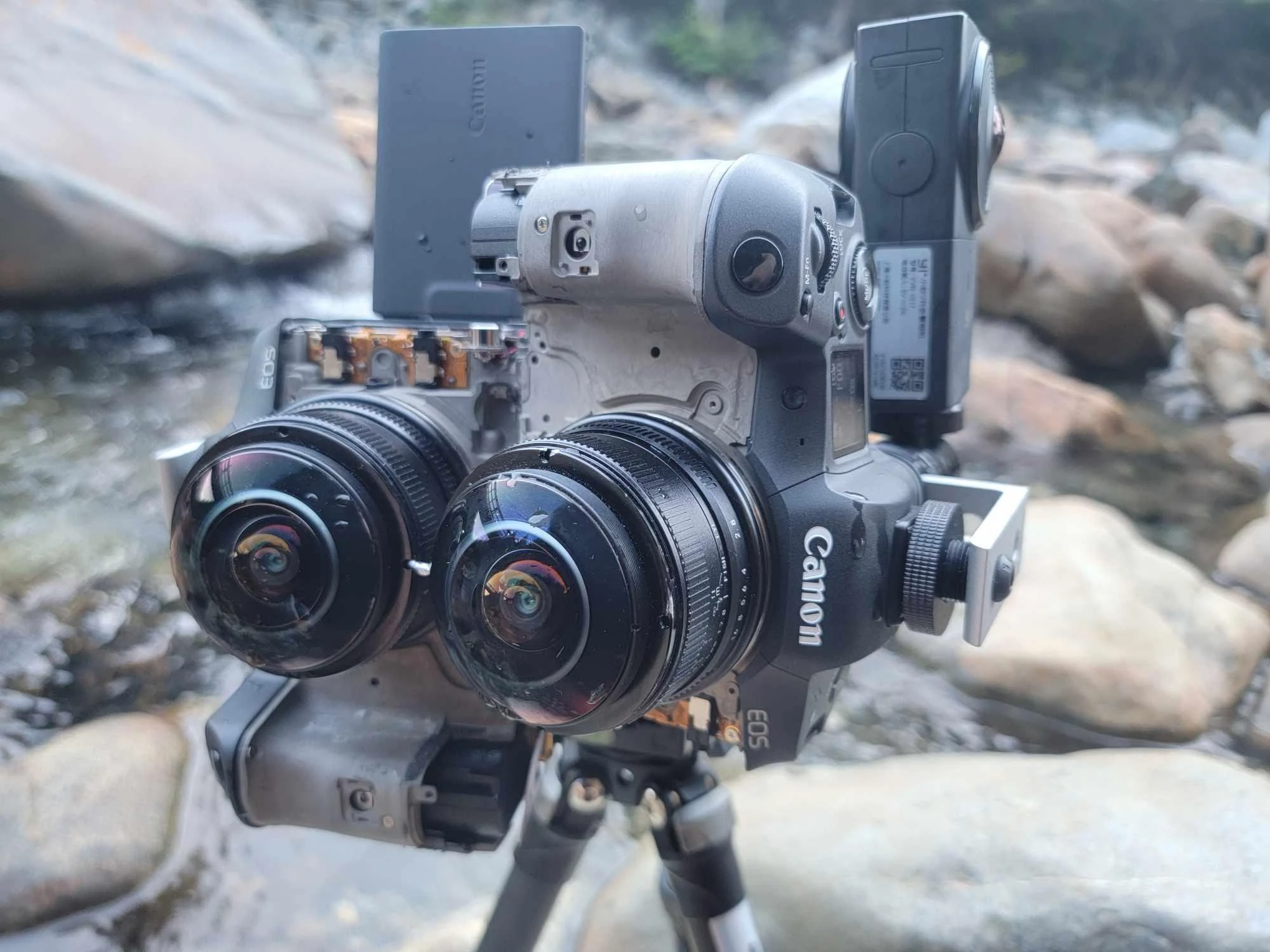 1 image
Portable rigs and studio arrays record synchronized views for stereoscopic, panoramic and volumetric processing. Optics, camera calibration and synchronization determine what the reconstruction software has to work with.
View the capture systemsOur development uses NVIDIA GPUs for image processing and spatial media. HP’s case study documents local AI inference, custom machine-learning workflows, background inpainting and high-resolution masking.
Current Mirage development extends GPU rendering into the browser through WebGPU, alongside native Vision Pro playback.
8 imagesAsk about the demonstrated platform, current development or a technology partnership.